Boring solutions to passionate niches (but not exciting ones)
How an unusual passion-driven channel led to enjoyable work for an awesome game publisher client
TLDR
- JAST is a client of mine who owns a game publishing platform and storefront spanning Japan, China, and North America; they’ve been at it for 30 years.
- The way I met them was unusual: at a Japanese animation convention in Germany!
- A shared passion and sustained events turned into a wonderful engagement with them to evolve their platform.
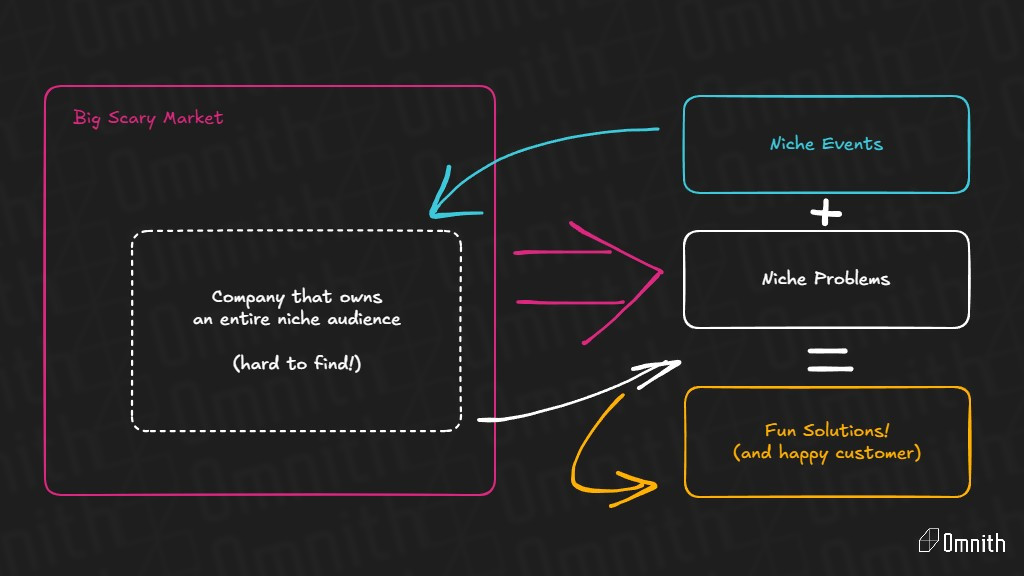
- Learning: look for unique or niche areas a customer solely owns (or is well-partnered within) that has a problem you can solve.
> kanomeister :enter
JAST1 is a publisher for niche video games from Japanese, Chinese, and NA developers into and across those respective gamer markets. They own a storefront, a partner portal, and a build platform (I built for them!) that make it really easy to distribute those devs’ games to various platforms. Other store platforms’ positionings make it very difficult for them to capture this specific game audience, which is why JAST exists!
They originally started way back in 1996 by translating Japanese and Chinese visual novels & games into English for the niche there to enjoy… from which the simple solve caught on, and grew over time into this fully-fledged platform. I met them at a convention in Germany helping a friend of mine run his booth for virtual content creators… not a conventional channel by any means, but one I am passionate about! And so are they, as I learned through lunches and link-ups with them at later events in LA, San Jose, and New York. (hi Nick!)
The solution is quite boring, although it is a bit technically tricky: ingest developer builds in a self-service fashion, scan them for malware, repack them in an easy-to-store incremental build format, let users purchase + download + install + play those games. Show developers and partners their sales metrics, distribute revenue shares.
The solution had better be “boring”, because we want it durable like an industrial shop. With good failure signals and reliable product that rarely triggers said signals, the JAST folks can focus on what they do best for the players. That means building new features and changing old ones very quickly, and sustaining that ability too!
Easy(ish), right? Indeed it is: the company produces a lot of revenue every year on this basis, and are partnered with a number of large Japanese brands and creatives & artists today as a result. They were there when the opportunity presented itself, so they executed on it. And I’m very grateful for the opportunity to contribute to that vision! It’s a nice break from the rigor that goes into solving a matrix laden with compliance frameworks, non-technical incentives, and existing platform backing product choices — as fun as that is.
I feel very much the same about a game jam that I run: HoloJam, the latest seventh iteration of which saw nearly a thousand cumulative developers and creatives band together to produce games about deadlines and timing. Over three years ago (holy cow!), somebody asked the same question I had in a creator community I’m part of: “why isn’t there a game jam for these talents?”
That question turned into a journey to building the community I wanted to see. My vision was and always remains to bring together a world of developers, artists, musicians, writers, and game-related creatives to do one thing: cook!
Games are still one of the hardest pieces of software to produce, being an abominable orchestration of several dozen mechanical features and gameplay elements and user interfaces (often suffering from extreme scope creep and scope removal, courtesy of rapid creative iteration and prototyping) on a tight event loop that must render graphics in under 16 milliseconds / 60 times per second.
Only a multi-threaded operating system or distributed cloud platform at the scale of AWS rival that for complexity! (source: I’ve touched Linux internals for malloc (grr) and worked on Azure internals2… both pretty in their own ways, but equally not pretty.) But that complexity came from somewhere… I recommend a dip into Game Programming Patterns to learn more.
Having done it for just about 12 years now, I’ve gotta say that games are actually one of my favorite projects to work on. In the way that a blacksmith’s joy comes from their equal balance of forging tools for the job and forging the jobs themselves, so too do I appreciate honing my problem-solving and architectural abilities through the rigorous exercises that blend my creative brainworms, storytelling, modular decoupled systems, data designs, and attention to detail into a refined playable product that does one thing: make the player feel something.
Clients like to feel good, and we like to make clients feel good… but they don’t mind feeling sad or upset in the right places. Vindication, incentive to advance a goal this quarter, laying a deep problem bare for all to see.
And as it turns out, players are the same! Whether you’re a go-to-market expert or an engineer, I hope crossing the bridges of domains like I do on the daily helps you think about not only how you go about solving a problem, but how to go about finding the problem in the first place.
You just might find a new awesome and unique customer! Let me know if you do on LinkedIn or on Hacker News -> would love to hear about it.
> kanomeister :exit
(this post was written entirely by hand in a Markdown doc.)
In case you’re curious about JAST: https://jaststore.com/ ↩︎
Specifically, on the public and sovereign cloud deployments of Azure’s App Service, Container Apps, and Functions services ↩︎